
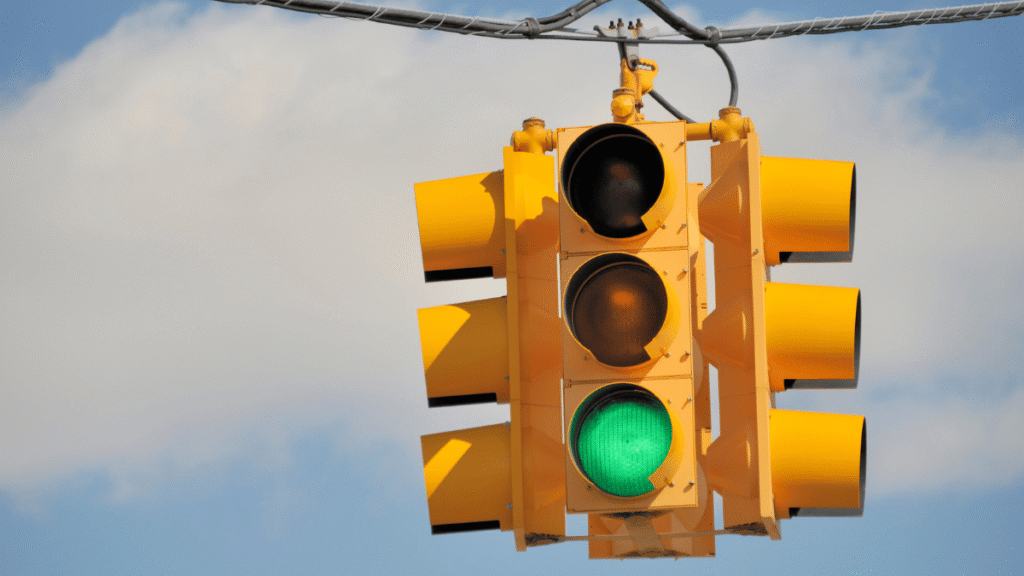
A viral claim says a fourth color is about to be added to traffic lights across America. The idea is real and comes from serious researchers, but “official” overstates it. No federal or state agency has approved a new signal. Here is what is actually being proposed.
Where the Idea Comes From
Transportation engineers at North Carolina State University, led by Ali Hajbabaie, have proposed adding a fourth signal they call the “white phase.” It is designed for a future in which self-driving cars share the road with human drivers.
How the White Light Would Work
- Self-driving cars approaching an intersection communicate wirelessly with each other and with the signal.
- When enough of them are present, the white light switches on.
- The autonomous vehicles coordinate their own movement through the intersection.
- Human drivers simply follow the vehicle in front of them.
- When too few self-driving cars are around, the signal returns to the normal red, yellow and green pattern.
What the Research Found
- The concept was tested in computer traffic simulations, not on real streets.
- Traffic moved more smoothly and vehicles burned less fuel because there was less stop-and-go driving.
- When only 10% to 30% of vehicles were autonomous, the improvement was small.
- A later study that added pedestrians found delays at intersections fell by about 25%.
Is It Coming to Your City?
Not anytime soon. The researchers themselves say governments will not adopt this technology in the immediate future, and that any pilot projects would need careful safety planning first. They have also said the light does not even have to be white. What matters is a clear signal that drivers can recognize.
What Drivers Should Know Right Now
- Red still means stop and green still means go.
- No driver’s manual or road test has changed because of this proposal.
- You do not need to learn a new rule today.
The white light is an interesting look at how roads may work once self-driving cars become common. For now, it remains a research idea, not a law.